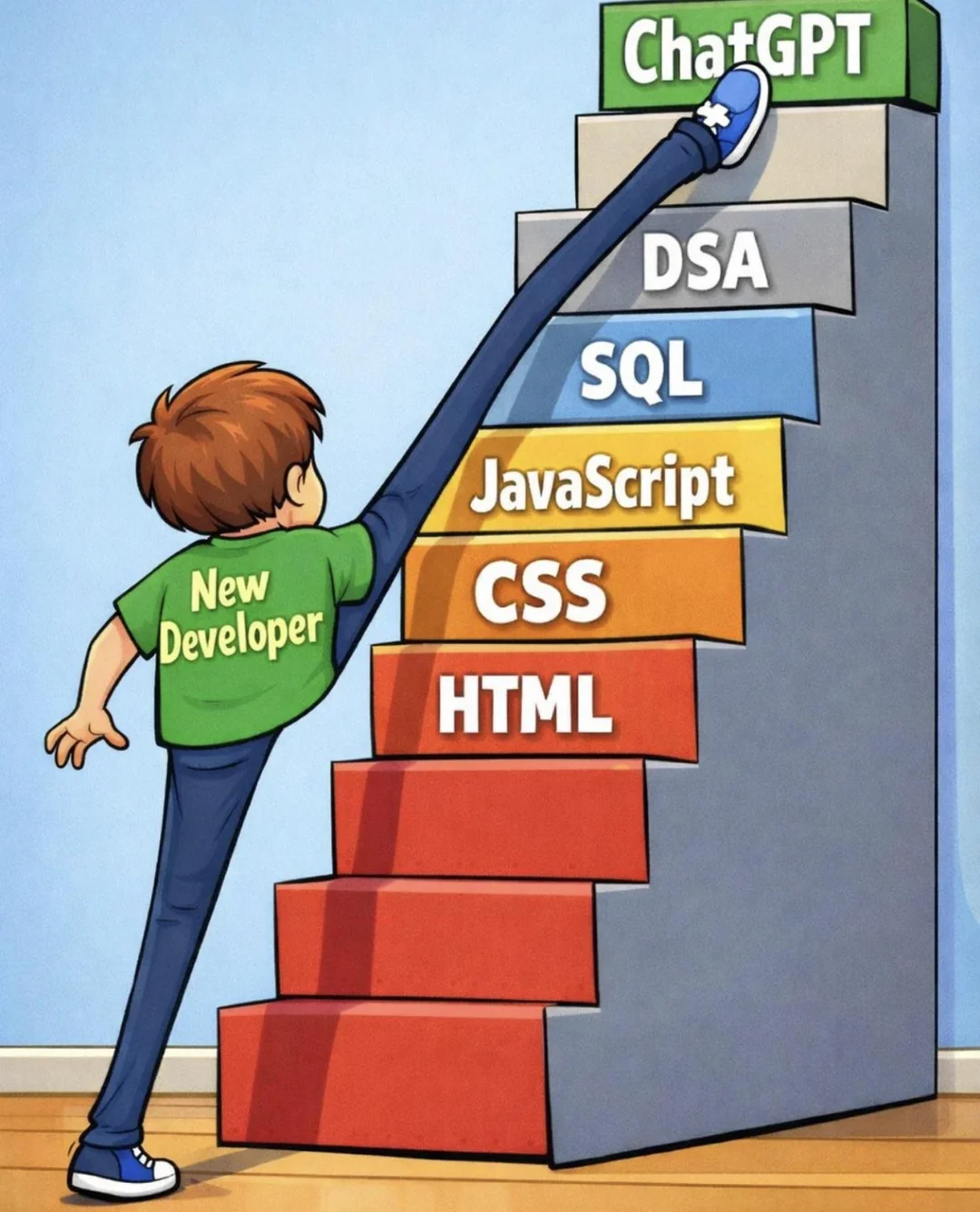
I often discuss the future of software development with my colleagues. Will AI replace us all? Or are we oll gonna build a one-person billion-dollar company tomorrow? (I doubt it)
Here is just my latest brain fart on that topic - mostly for reflection and future self-reference.
A Small Side Project That Changed My Perspective
One of my side projects involves helping my father-in-law with his business website.
We run a WordPress setup with a few customizations and a commercial plugin that handled the core functionality. It was good but the critical use cases we needed were never really supported in an ideal way. It had a ton of features that we did not want and made the basic worflows very cumbersome.
One evening while experimenting with Google’s Antigravity, I started vibe-coding a custom plugin that in the end seamlessly replaced the existing solution. It only took three evening sessions. Not a single line of code was written by me.
The result was an extremely tailored solution that did exactly what we needed - nothing more, nothing less - in a much cleaner way. The whole workflow is now incredibly streamlined. I can’t stress enough how happy I am with the current solution.
Finally being able to fully customize the plugin also instantly inspired the people who use it daily to suggest additional features - really good ones that clearly made sense. Without being begged for feedback. It just came naturally. Implemented and shipped in no time too.
I think this was the first time in 15 years that I truly felt agile.
The future? Tiny teams replacing half-baked customizations with highly customized software at incredible speed.
What does it take? A strong foundation. WordPress is incredible. Like it or not, its architecture and hooks for creating custom solutions are *chef’s kiss!
In addition, due to licensing requirements, all plugins that exist have to be open source - I think that also plays a huge role in why the AI models performed so well. High-quality training data.
I think that’s also a good approach for business application in the future: AI generated, hightly customized and extremely fast shipped solutions on a trusted base. What’s the b2b equivalent to WordPress? SAP, Dynamics,… N8N,… Who really knows.
However.
What really made this experiment fun was that, even though I had never written a single WordPress plugin before, I could read the generated code almost like plain English and immediately understand how everything fit together. Even at midnight after a 10h workday.
That was wild.
Right Now
Here’s the uncomfortable part - at least as seen from my current bubble:
Right now it’s best to be a senior full-stack developer.
You may not write any line of code yourself anymore, but in my opinion you still must be able to understand everything the AI generates and give architectural direction. You need to know what’s possible and which fundamental decisions will get you to your goal fastest. You can iterate this with the AI too in a planning phase but I think it’s important to have a wide knowledge base to challenge some initial ideas.
You also absolutely must be a tester at heart. Because that’s arguably the biggest part of the job now.
Lastly, the core skill you already need - and one that no AI will likely ever be able to fully take from you - is the ability to understand complex domains and the real usecases quickly.
I’m still afraid of pure vibe coding where the generated code becomes a black box that nobody looks into - at least for now, especially for business software.
Maybe this is just a temporary phase.
It’s entirely possible that in the future AI systems won’t even produce human-readable code anymore at all. Who knows - maybe they’ll go straight to assembly.
You’ve got an idea? Ship it today. Your B2B customer needs something? Ship a highly tailored solutions tomorrow.
Zoom out
While I think highly tailored B2B solutions are emerging right now, I’m also wondering whether we’ll even need all those websites, apps, plugins, and interfaces in the long run.
I see huge potential in AI agents that operate autonomously - no longer triggered explicitly by prompts, but by observing your life.
You talk to a friend about going on a holiday trip together: An AI agent runs an conversation intent classification to figure out if that was hypothetical, casual small talk or true intend, consolidates your calendars, research destinations, gather quotes, checks your vacation budget, books a hotel and flights that are free to cancel, and present everything to you for approval.
In such a world, nobody would need a website to book flights or hotels any longer. Systems would act on our behalf through well-documented APIs tailored for AI agents or just talk directly to other AI agents that then take it further.
I think it’s very likely that in many areas we’ll shift from customer-facing interfaces to agent-facing interfaces rather quickly. And I have to agree to Peter Steinbergers prediction, many apps will become obsolete.
At least, those are my thoughts as of today. Who really knows where the journey is heading?
One thing is certain: many jobs will be replaced, many will be transformed, many will cease to exist entirely, and many new ones will arise. Exciting times.